
The Evolution of the Abaya: From a Traditional Garment to a Modern Fashion Symbol
From a symbol of cultural identity and modesty to a canvas for creativity and self-expression, how did the abaya become one of fashion's most compelling examples of tradition meeting modernity?
Some garments change with time. Others transcend it, becoming an inseparable part of cultural identity.
The abaya is one of those rare pieces.
The abaya has never been merely a black garment worn over clothing. For generations, it has carried deep cultural and social significance, representing identity, modesty, and tradition across Arab societies, particularly in the Gulf region.
But what makes the story of the abaya truly fascinating is not just its history.
It is its extraordinary ability to evolve.
How did a garment once associated primarily with simple silhouettes and traditional black fabrics transform into a contemporary fashion statement, celebrated for its innovative designs, distinctive details, and growing presence in the global fashion landscape?
When Simplicity Defined Elegance
For decades, the traditional abaya was recognized for its flowing silhouette, loose fit, and dark colors, particularly black.
While its styles and cultural significance varied across communities, its primary purpose was to provide modest coverage while reflecting a sense of cultural belonging.
Yet simplicity never meant an absence of beauty.
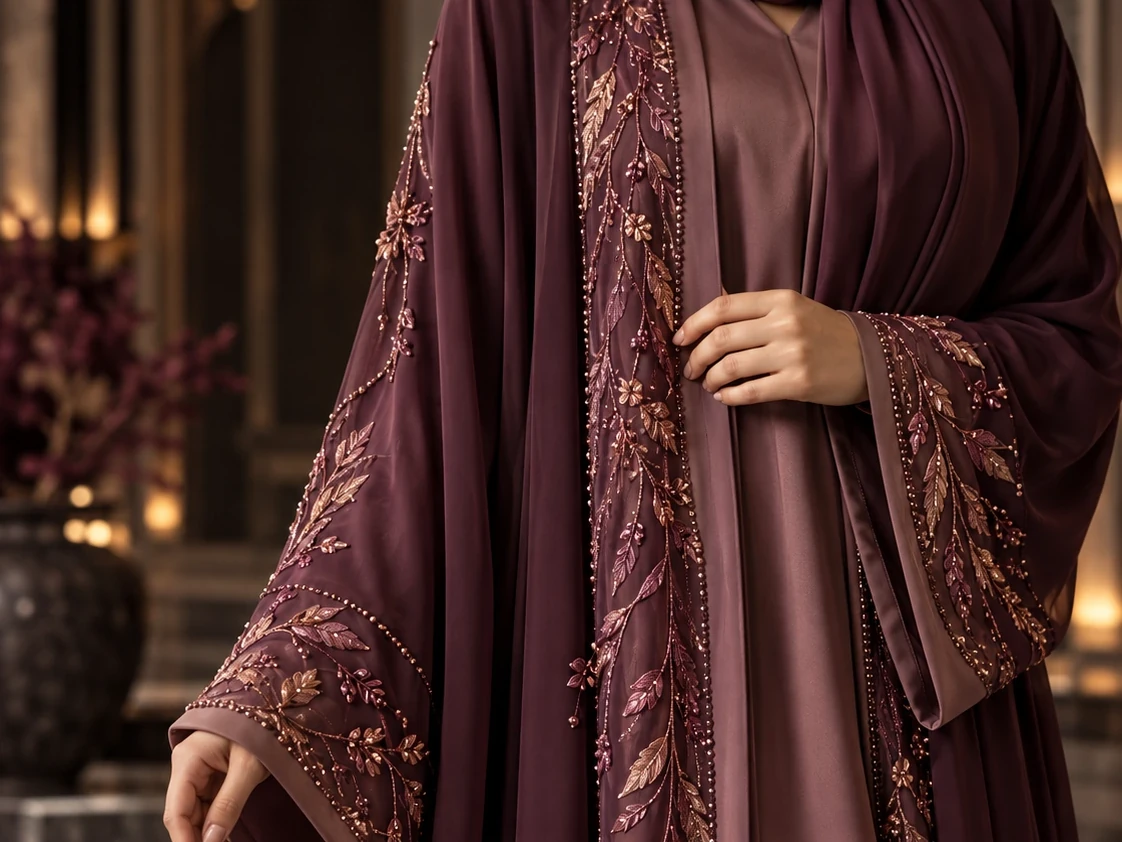
Delicate embroidery, decorative details, variations in fabric, and traditional craftsmanship gave the abaya its own understated elegance.
The abaya expressed cultural identity long before it became a medium for individual style.
And that is precisely what makes its transformation so remarkable.
The Moment the Abaya Became a Fashion Choice
As lifestyles evolved and women became increasingly visible across professional, educational, entrepreneurial, and creative fields, their expectations of fashion evolved as well.
The question was no longer simply:
How can the abaya preserve its traditional character?
Instead, it became:
How can the abaya reflect a woman's personality and modern lifestyle without losing its cultural identity?
This marked the beginning of a new chapter in abaya design.
Designers began experimenting with silhouettes inspired by coats and kimonos, architectural cuts, statement sleeves, fluid fabrics, and contemporary tailoring.
Color palettes expanded beyond traditional black, introducing soft neutrals, earthy shades, pastels, and bold statement colors.
The modern abaya gradually became more versatile.
It could be a minimalist everyday essential, an elegant statement piece for special occasions, or a contemporary creation combining clean lines with understated luxury.
Innovation was no longer limited to adding embroidery or introducing new colors.
It became a complete reimagining of what an abaya could be.
The Designers Who Rewrote the Story
Perhaps the most significant transformation in the abaya's journey came when it evolved from a garment shaped primarily by established traditions into an open space for artistic experimentation.
Fashion designers began introducing fresh perspectives, blending traditional craftsmanship with contemporary techniques and cultural inspiration with modern aesthetics.
Today, a single abaya design may draw inspiration from Arabian architecture, heritage patterns, abstract art, or the principles of minimalist fashion.
This creative diversity has changed more than the appearance of the abaya.
It has expanded its meaning.
The contemporary abaya is no longer defined by one familiar silhouette or a single interpretation of modest fashion.
Instead, it can reflect the designer's creative vision, aesthetic identity, and artistic philosophy.
The abaya has evolved from a garment created around a familiar pattern into a fashion piece carrying a designer's signature, identity, and story.
From Local Tradition to the Global Fashion Landscape
The abaya's growing presence in contemporary fashion did not happen overnight.
As the regional fashion industry developed and global interest in modest fashion expanded, abaya-inspired designs became part of a broader conversation about cultural diversity, representation, and creativity in fashion.
Digital platforms and social media have also played an important role, giving emerging designers greater opportunities to showcase their collections and connect with audiences beyond geographical boundaries.
Today, contemporary abayas can be seen in designer collections, fashion exhibitions, industry events, and personal styles that seamlessly blend heritage with modern aesthetics.
But perhaps the most interesting aspect of this evolution is that the abaya did not need to abandon its roots to gain relevance.
In many cases, those roots became its greatest strength.
In a fashion world where trends can quickly become repetitive, cultural identity offers something far more distinctive: authenticity.
Why the Modern Abaya Is More Than Just a Fashion Trend
The modern abaya's appeal is not simply about following seasonal trends.
Its strength lies in its ability to bring together three essential elements:
Identity: Preserving its cultural and historical significance while embracing contemporary interpretations.
Innovation: Giving designers the freedom to experiment with silhouettes, materials, colors, and intricate details.
Self-expression: Offering women more choices to reflect their personal tastes, lifestyles, and individual sense of style.
Together, these elements make the abaya a powerful example of how traditional clothing can evolve without losing its meaning.
Great design does not always require leaving the past behind.
Sometimes, the most meaningful innovation comes from understanding the past and finding new ways to express it.
The Future of the Abaya: A New Era of Creativity?
With the growing visibility of independent designers, advancements in fashion technology, and the expanding reach of digital platforms, the abaya is entering another promising chapter.
The future may bring greater experimentation with sustainable materials, personalized tailoring, multifunctional silhouettes, and designs that combine traditional craftsmanship with contemporary production techniques.
But perhaps the most important question is not:
What will the abaya look like in the future?
It is:
Who are the designers who will shape its next identity?
Across the fashion industry, countless emerging talents have fresh perspectives, original ideas, and creative visions waiting to be discovered.
This is why platforms that support fashion designers, showcase their creations, and help them reach wider audiences are becoming increasingly valuable.
It is also one of the ideas behind Malaky, a fashion discovery platform created to highlight designers, celebrate their creativity, and give emerging talents greater visibility.
Because the future of fashion is not shaped by established names alone.
It is also shaped by the creative voices the world has yet to discover.
The Abaya Didn't Change to Follow Fashion. It Proved That Identity Can Shape Fashion.
The history of the abaya is far more than a journey from black fabrics to colorful designs, or from traditional silhouettes to contemporary creations.
It is a story of cultural evolution, artistic expression, and the extraordinary ability of a single garment to reinvent itself across generations while preserving its essence.
Tradition is not the opposite of modernity. And innovation does not require abandoning our roots.
Perhaps that is the most powerful lesson the abaya offers the fashion industry:
Some designs follow the times. Others redefine them.


